 Official websites use .gov
A .gov website belongs to an official government organization in the United States.
 Secure .gov websites use HTTPS
A lock (Lock A locked padlock) or https:// means you’ve safely connected to the .gov website. Share sensitive information only on official, secure websites.
Coal Mining Effluent Guidelines
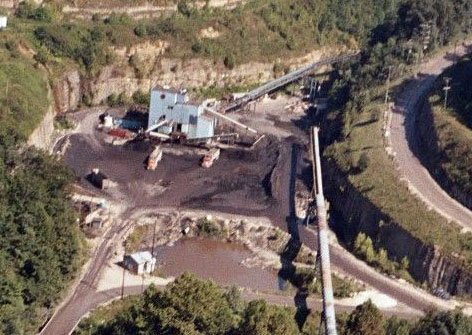 The EPA promulgated the Coal Mining Effluent Guidelines and Standards (40 CFR Part 434Exit EPA’s website) in 1975, and amended the regulation in 1976, 1977, 1979, 1982, 1985, and 2002. The regulation covers wastewater discharges from mine drainage, coal storage facilities, and coal preparation plants. The Coal Mining Effluent Guidelines and Standards are incorporated into NPDES permits.
On this page:
* What is Coal Mining?
* Pollutants and Subcategories
* Coal Mining Detailed Study - 2008
* Rulemaking History
* Additional Information
The EPA promulgated the Coal Mining Effluent Guidelines and Standards (40 CFR Part 434Exit EPA’s website) in 1975, and amended the regulation in 1976, 1977, 1979, 1982, 1985, and 2002. The regulation covers wastewater discharges from mine drainage, coal storage facilities, and coal preparation plants. The Coal Mining Effluent Guidelines and Standards are incorporated into NPDES permits.
On this page:
* What is Coal Mining?
* Pollutants and Subcategories
* Coal Mining Detailed Study - 2008
* Rulemaking History
* Additional Information
What is Coal Mining?
Related Information * NPDES policy documents for mining facilities * Stormwater Fact Sheet (Sector H) * Surface Coal Mining in Appalachia
Mine operators extract coal from underground and surface mines using machinery and explosives. Coal remining occurs on mine lands and coal refuse piles that have been previously mined. Coal preparation plants remove waste material from coal by washing and concentrating. The plants may also sort and screen coal by size and may crush the coal to facilitate handling and processing. The coal may be stored at several stages in the process of preparation and transport to the final customer. Wastewater is generated during the mining process from groundwater produced during coal extraction, from water used by operators for equipment cooling and dust control, and from precipitation entering mines. Wastewater is also produced during the coal preparation process and from contaminated stormwater at coal storage facilities. These activities are included within NAICS code 21211, Coal Mining. (Note: the NAICS group listing is provided as a guide and does not define the coverage of the Coal Mining regulations. For precise definitions of coverage, see the applicability sections in 40 CFR Part 434Exit EPA’s website.)
Pollutants and Subcategories
Regulated Pollutants
The regulated parameters vary by subcategory, and include: * Iron * Manganese * TSS * Settleable Solids * Acidity * pH (abnormally high or low)
Regulation Subcategories
The Coal Mining Effluent Guidelines apply to wastewater discharges from facilities in six subcategories: * Coal Preparation Plants and Associated Areas (Subpart BExit EPA’s website) * Acid or Ferruginous Mine Drainage (Subpart CExit EPA’s website) * Alkaline Mine Drainage (Subpart DExit EPA’s website) * Post-Mining Areas (Subpart EExit EPA’s website) * Coal Remining (Subpart GExit EPA’s website) * Western Alkaline Coal Mining (Subpart HExit EPA’s website)
Subparts AExit EPA’s website and FExit EPA’s website contain General and Miscellaneous Provisions, respectively.
Coal Mining Detailed Study - 2008
The EPA conducted a review of wastewater discharges from coal mines, including a coal industry profile, mine drainage characteristics, treatment technologies and costs. The report was prepared in consideration of possible revisions to existing Effluent Guidelines regulations. * Report and appendices
Rulemaking History
2002 Amendment
Added Subparts G and H
* Final RuleExit EPA’s website (January 23, 2002)
* Documents, including:
* Development Document for the Western Alkaline Coal Mining Subcategory
Describes industry processes, pollutants generated, available control & treatment technologies, the technical basis for the final rule, and costs of the rule
* Coal Remining Best Management Practices Guidance Manual
Describes abandoned mine land conditions and the performance of BMPs that have been implemented at remining operations. The manual is a technical reference document that presents research and data concerning the prediction and prevention of acid mine drainage
* Proposed RuleExit EPA’s website (April 11, 2000)
1985 Amendment
Revised BPT, BAT, NSPS (pursuant to litigation settlement) * Documents, including: * Final rule (October 9, 1985) * Proposed rule (May 5, 1984)
1982 Amendment
Added BAT; revised BPT and NSPS requirements; reserved BCT
* Documents, including:
* Final Rule (October 13, 1982)
* Development Document
Industry description, wastewater characterization, treatment technologies, regulatory compliance cost estimates and pollutant loadings for the final rule
* Proposed Rule (revisions & corrections) (May 29, 1981)
* Proposed Rule (BPT, BAT, BCT, NSPS) (January 13, 1981)
1979 Amendment
Added NSPS * Documents, including: * Final Rule (Amended definition of "new source coal mine") (June 27, 1980) * Final Rule (Precipitation Exemption) (December 28, 1979) * Final Rule (Clarifying amendment–catastrophic rainfall exemption) (April 2, 1979) * Original Final Rule (NSPS) and PSES withdrawal (January 12, 1979) * Proposed Rule (NSPS) (September 19, 1977) * Proposed Rule (PSES) (October 17, 1975)
1977 Amendment
Revised BPT requirements * Documents, including: * Final Rule (April 26, 1977) * Proposed Rule (BPT and BAT) (May 13, 1976)
1976 Amendment
Revised BPT requirements
* Documents, including:
* Interim Final Rule (May 13, 1976)
* Development Document
Industry description, wastewater characterization, treatment technologies, regulatory compliance cost estimates and pollutant loadings for the final rule
1975 Initial Rulemaking
Established BPT requirements
* Documents, including:
* Interim Final Rule (October 17, 1975)
* Development Document
Industry description, wastewater characterization, treatment technologies, regulatory compliance cost estimates and pollutant loadings for the final rule
Additional Information
For additional information regarding the Coal Mining Effluent Guidelines, please contact Steve Whitlock (whitlock.steve@epa.gov) or 202-566-1541.
Effluent Guidelines
Open Sidenav Menu Close Sidenav Menu Contact Us About Effluent Guidelines Contact Us About Effluent Guidelines to ask a question, provide feedback, or report a problem. Last updated on May 8, 2026 Welcome! Please share your feedback on how we can make www.epa.gov work better for you. A red asterisk (*) indicates a required field.
Success
Thank you. Your feedback has been received.
Error
alert message Required Questions - page 1 of 2 question_55203_answer_01 How would you rate your experience on www.epa.gov today? *
0 Stars 1 Star 2 Stars 3 Stars 4 Stars 5 Stars Please explain the reason for your rating. * 400 characters allowed Would you like to take two more minutes to answer more questions to help us improve our services? Yes, keep going → No, only submit these responses Optional questions - page 2 of 2 How would you describe yourself? Business Government employee Scientist Student Other Enter other text Please tell us why you visited www.epa.gov today. 400 characters allowed Did you visit www.epa.gov to accomplish a specific task? If yes, please explain why you were able or unable to accomplish your task. 400 characters allowed How can we make www.epa.gov a more helpful website? 400 characters allowed Submit [NPDES]: National Pollutant Discharge Elimination System [NAICS]: North American Industrial Classification System [TSS]: total suspended solids [BMPs]: best management practices [BPT]: Best Practicable Technology [BAT]: Best Available Technology [NSPS]: New Source Performance Standards [BCT]: Best Conventional Technology [PSES]: Pretreatment Standards for Existing Sources [*]: required