 Official websites use .gov
A .gov website belongs to an official government organization in the United States.
 Secure .gov websites use HTTPS
A lock (Lock A locked padlock) or https:// means you’ve safely connected to the .gov website. Share sensitive information only on official, secure websites.
Organic Chemicals, Plastics and Synthetic Fibers Effluent Guidelines
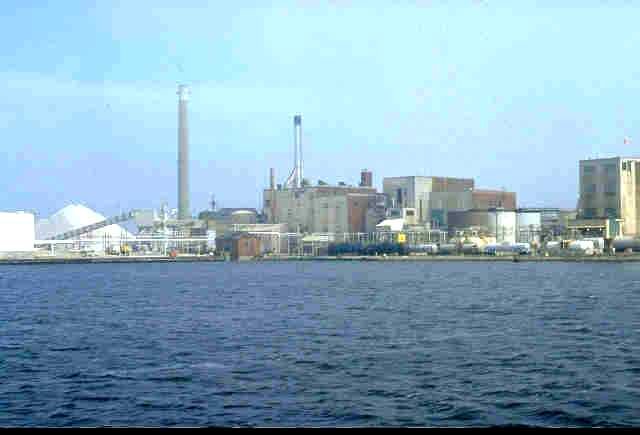 The EPA promulgated the Organic Chemicals, Plastics and Synthetic Fibers (OCPSF) Effluent Guidelines and Standards (40 CFR Part 414Exit EPA’s website) in 1987, and amended the regulation in 1989, 1990, 1992, and 1993. The regulation covers wastewater discharges from more than 1,000 chemical facilities. The OCPSF Effluent Guidelines and Standards are incorporated into NPDES permits for direct dischargersdirect dischargersA point source that discharges pollutants to waters of the United States, such as streams, lakes, or oceans., and permits or other control mechanisms for indirect dischargersindirect dischargersA facility that discharges pollutants to a publicly owned treatment works (municipal sewage treatment plant). (refer to Pretreatment Program).
On this page:
* What is OCPSF?
* Facilities covered
* PFAS Advance Notice of Proposed Rulemaking
* Chlorine and Chlorinated Hydrocarbon Manufacturing
* Preliminary Study of Cellulose Product Manufacturing
* Guidance document
* Rulemaking history
* Additional information
The EPA promulgated the Organic Chemicals, Plastics and Synthetic Fibers (OCPSF) Effluent Guidelines and Standards (40 CFR Part 414Exit EPA’s website) in 1987, and amended the regulation in 1989, 1990, 1992, and 1993. The regulation covers wastewater discharges from more than 1,000 chemical facilities. The OCPSF Effluent Guidelines and Standards are incorporated into NPDES permits for direct dischargersdirect dischargersA point source that discharges pollutants to waters of the United States, such as streams, lakes, or oceans., and permits or other control mechanisms for indirect dischargersindirect dischargersA facility that discharges pollutants to a publicly owned treatment works (municipal sewage treatment plant). (refer to Pretreatment Program).
On this page:
* What is OCPSF?
* Facilities covered
* PFAS Advance Notice of Proposed Rulemaking
* Chlorine and Chlorinated Hydrocarbon Manufacturing
* Preliminary Study of Cellulose Product Manufacturing
* Guidance document
* Rulemaking history
* Additional information
What is OCPSF?
The OCPSF category includes more than 1,000 chemical facilities producing over 25,000 end products, such as benzene, toluene, polypropylene, polyvinyl chloride, chlorinated solvents, rubber precursors, rayon, nylon, and polyester. The OCPSF industry is large and diverse, and many plants are highly complex. Some plants produce chemicals in large volumes through continuous chemical processes, while others produce only small volumes of "specialty" chemicals through batch chemical processes.
Facilities Covered
Related Information * Stormwater fact sheet (Sector C: Chemical and Allied Products Manufacturing and Refining)
The OCPSF regulation applies to process wastewater discharges resulting from the manufacture of the products or product groups listed in the rayon fibers, other fibers, thermoplastic resins, thermosetting resins, commodity organic chemicals, bulk organic chemicals, and specialty organic chemicals subcategories. The products are included within the following SIC groups: * 2821: Plastic Materials, Synthetic Resins, and Nonvulcanizable Elastomers * 2823: Cellulosic Man-Made Fibers * 2824: Synthetic Organic Fibers, Except Cellulosic * 2865: Cyclic Crudes and Intermediates, Dyes, and Organic Pigments * 2869: Industrial Organic Chemicals, Not Elsewhere Classified.
Note: This SIC listing is provided as a guide and does not define the coverage of the OCPSF regulations. For precise definitions of coverage, refer to the applicability sections in 40 CFR Part 414Exit EPA’s website.
Subcategories
- General Requirements (Subpart AExit EPA’s website)
- Rayon Fibers (Subpart BExit EPA’s website)
- Other Fibers (Subpart CExit EPA’s website)
- Thermoplastic Resins (Subpart DExit EPA’s website)
- Thermosetting Resins (Subpart EExit EPA’s website)
- Commodity Organic Chemicals (Subpart FExit EPA’s website)
- Bulk Organic Chemicals (Subpart GExit EPA’s website)
- Specialty Organic Chemicals (Subpart HExit EPA’s website)
- Direct Discharge Point Sources That Use End-of-Pipe Biological Treatment (Subpart IExit EPA’s website)
- Direct Discharge Point Sources That Do Not Use End-of-Pipe Biological Treatment (Subpart JExit EPA’s website)
- Indirect Discharge Point Sources (Subpart KExit EPA’s website)
Related Category
PFAS Advance Notice of Proposed Rulemaking
In February 2019, the EPA announced in the Per- and polyfluoroalkyl substances (PFAS) Action Plan that the Agency was taking steps to evaluate if industrial sources warranted regulation to address PFAS discharges. After studying the available data regarding wastewater discharges from facilities that manufacture PFAS, the EPA is publishing an advance notice of proposed rulemaking (ANPRM) to solicit data and information regarding manufacturers of PFAS and the presence and treatment of PFAS in discharges from this industrial category. The EPA is also requesting information regarding PFAS formulators, which are facilities that produce a variety of PFAS products and materials from PFAS feedstocks. Both PFAS manufacturers and formulators are currently regulated under the OCPSF category. The EPA will use any data and information obtained via public comment on the ANPRM to inform its decision about whether a proposed rulemaking may be necessary.
* ANPRM Federal Register NoticeExit EPA’s website (March 17, 2021)
(On March 10, 2021, the EPA re-signed the Advance Notice of Proposed Rulemaking for PFAS Manufacturers and Formulators)
* User Guide to the Docket for the ANPRM (March 2021)
Related Information
- PFAS Activities at EPA - Overview
- Clean Water Act Analytical Methods for PFAS - Overview
Chlorine and Chlorinated Hydrocarbon Manufacturing
The EPA began a new rulemaking in 2005 to address wastewater discharges from facilities that manufacture chlorine and certain chlorinated hydrocarbons (CCH). The Agency collected data on CCH facilities through 2007, and, following a review of the information, it discontinued the rulemaking in 2012. * CCH Facilities - Additional Information
Preliminary Study of Cellulose Product Manufacturing - 2011
The EPA conducted a study of regenerated cellulose manufacturers, focusing on discharges of carbon disulfide (CS 2). Cellulose products manufacturers use CS2 in the viscose process to break down aged alkali cellulose prior to regeneration. CS2 can enter the wastewater stream at these facilities from CS2 unloading and storage, the viscose process, CS2 recovery, and/or air pollution controls. Current effluent guidelines do not cover CS2 discharges. * Preliminary Study of Carbon Disulfide Discharges from Cellulose Products Manufacturers (December 2011)
Guidance Document
- Product and Product Group Discharges Subject to OCPSF Effluent Guidelines (2005)
Provides assistance to permit writers and regulated facilities in determining the applicability of the OCPSF regulation to various products manufactured by facilities in this category. Includes an explanation of the extensive chemical nomenclature in the regulation.
Rulemaking History
1993 Amendment
- Revised criteria for designating "metal-bearing" and "cyanide-bearing" waste streams.
- Added Subpart J limitations for 19 additional pollutants (direct dischargers) and Subpart K limitations for 11 pollutants (indirect dischargers).
- Documents, including:
- Final Rule (July 9, 1993)
- Development Document - Supplement (May 1993)
1992 Amendment
- Alternative cyanide limitations for unavoidable complexing of cyanide at the process source of cyanide-bearing waste streams.
- Allows control authorities to accommodate low background levels of metals in non-metal-bearing waste streams that result from the corrosion of construction materials, intake water, or other incidental metal sources.
- Specifies the method of determining BOD and TSS limitations for plants that manufacture products in more than one subcategory.
- Corrects listing errors in the appendices of the regulation.
- Corrects subcategory listing errors for six product or product groups.
- Documents, including:
- Final Rule (September 11, 1992)
1990 Amendment
Revoked selected portions of the regulations pursuant to litigation * Documents, including: * Final Rule (June 29, 1990)
1989 Amendment
Technical amendments and revocation of selected portions of the regulations * Documents, including: * Final Rule (June 27, 1989)
1987 Rulemaking
The OCPSF category replaced the Organics Chemicals Category and the Plastics and Synthetic Fibers Category. The latter two categories had been promulgated in 1974-76 and then withdrawn pursuant to litigation.
* Documents, including:
* Final Rule (November 5, 1987)
* Development Document
Describes industry processes, pollutants generated, available control and treatment technologies, the technical basis for the final rule, and costs of the rule
* Proposed Rule (March 21, 1983)
Additional Information
For additional information regarding the OCPSF Effluent Guidelines, please contact Samantha Lewis (lewis.samantha@epa.gov) or 202-566-1058.
Effluent Guidelines
Open Sidenav Menu Close Sidenav Menu Contact Us About Effluent Guidelines Contact Us About Effluent Guidelines to ask a question, provide feedback, or report a problem. Last updated on May 8, 2026 Welcome! Please share your feedback on how we can make www.epa.gov work better for you. A red asterisk (*) indicates a required field.
Success
Thank you. Your feedback has been received.
Error
alert message Required Questions - page 1 of 2 question_55203_answer_01 How would you rate your experience on www.epa.gov today? *
0 Stars 1 Star 2 Stars 3 Stars 4 Stars 5 Stars Please explain the reason for your rating. * 400 characters allowed Would you like to take two more minutes to answer more questions to help us improve our services? Yes, keep going → No, only submit these responses Optional questions - page 2 of 2 How would you describe yourself? Business Government employee Scientist Student Other Enter other text Please tell us why you visited www.epa.gov today. 400 characters allowed Did you visit www.epa.gov to accomplish a specific task? If yes, please explain why you were able or unable to accomplish your task. 400 characters allowed How can we make www.epa.gov a more helpful website? 400 characters allowed Submit [NPDES]: National Pollutant Discharge Elimination System [SIC]: Standard Industrial Classification [BOD]: biochemical oxygen demand [TSS]: total suspended solids []: required