 Official websites use .gov
A .gov website belongs to an official government organization in the United States.
 Secure .gov websites use HTTPS
A lock (Lock A locked padlock) or https:// means you’ve safely connected to the .gov website. Share sensitive information only on official, secure websites.
Textile Mills Effluent Guidelines
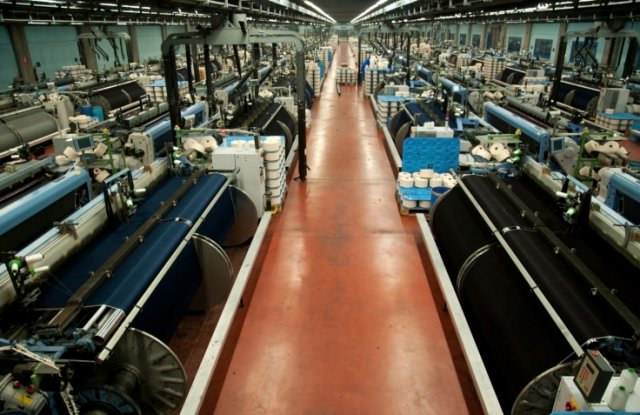 The EPA promulgated the Textile Mills Effluent Guidelines (40 CFR Part 410Exit EPA’s website) in 1974, and amended the regulation in 1977 and 1982. The regulation covers direct dischargerdirect dischargerA point source that discharges pollutants to waters of the United States, such as streams, lakes, or oceans. facilities. The Textile Mills Effluent Guidelines are incorporated into NPDES permits.
On this page:
* What is the Textile Mills Industry?
* Pollutants and Subcategories
* Detailed PFAS Study
* Guidance
* Rulemaking History
* Additional Information
The EPA promulgated the Textile Mills Effluent Guidelines (40 CFR Part 410Exit EPA’s website) in 1974, and amended the regulation in 1977 and 1982. The regulation covers direct dischargerdirect dischargerA point source that discharges pollutants to waters of the United States, such as streams, lakes, or oceans. facilities. The Textile Mills Effluent Guidelines are incorporated into NPDES permits.
On this page:
* What is the Textile Mills Industry?
* Pollutants and Subcategories
* Detailed PFAS Study
* Guidance
* Rulemaking History
* Additional Information
What is the Textile Mills Industry?
Textile mills are engaged principally in: * receiving and preparing fibers * transforming these materials into yarn, thread or webbing * converting the yarn and webbing into fabric or related products; and * finishing these materials.
Many facilities produce a final consumer product such as thread, yarn, bolt fabric, hosiery, towels, sheets and carpet, while the rest produce a transitional product for use by other establishments in the industry. Wastewater is generated when textile mills use the following processes: * wool scouring, topmaking, and general cleaning of raw wool * wool finishing, including carbonizing, fulling, dyeing, bleaching, rinsing, fireproofing, and other similar processes * yarn manufacture, unfinished fabric manufacture, fabric coating, fabric laminating, tire cord and fabric dipping, and carpet tufting and carpet backing * woven fabric finishing, including desizing, bleaching, mercerizing, dyeing, printing, resin treatment, waterproofing, flameproofing, and application of soil repellency and other special finishes * knit fabric finishing, including bleaching, mercerizing, dyeing, printing, resin treatment, waterproofing, flameproofing, and application of soil repellency and other special finishes * carpet finishing, including bleaching, scouring, carbonizing, fulling, dyeing, printing, resin treatment, waterproofing, flameproofing, soil repellency, looping, and backing with foamed and unfoamed latex and jute * stock and yarn finishing, including cleaning, scouring, bleaching, mercerizing, dyeing and special finishing * manufacturing of nonwoven textile products of wool, cotton, or synthetics, or blends of such fabrics
These activities are included within NAICS group 313, Textile Mills. Note: the NAICS listing is provided as a guide and does not define the coverage of the Textile Mills category. For precise definitions of coverage, see the applicability sections in 40 CFR Part 410Exit EPA’s website.
Pollutants and Subcategories
Regulated Pollutants
Effluent limitations vary by subcategory. * BOD5 * COD * TSS * Oil and grease
- Sulfide
- Phenols
- Total chromium
- pH
Regulation Subcategories
- Wool Scouring (Subpart AExit EPA’s website)
- Wool Finishing (Subpart BExit EPA’s website)
- Low Water Use Processing (Subpart CExit EPA’s website)
- Woven Fabric Finishing (Subpart DExit EPA’s website)
- Knit Fabric Finishing (Subpart EExit EPA’s website)
- Carpet Finishing (Subpart FExit EPA’s website)
- Stock and Yarn Finishing (Subpart GExit EPA’s website)
- Nonwoven Manufacturing (Subpart HExit EPA’s website)
- Felted Fabric Processing (Subpart IExit EPA’s website)
Detailed PFAS Study
As announced in the Effluent Guidelines Program Plan 15 (January 2023), the EPA continued to evaluate the available data on types and concentrations of PFAS PFAS PFAS, Per- and polyfluoroalkyl substances (PFAS) are a group of synthetic chemicals that have been in use since the 1940s. PFAS are found in a wide array of consumer and industrial products. PFAS manufacturing and processing facilities, facilities using PFAS in production of other products, airports, and military installations are some of the potential contributors of PFAS releases into the air, soil, and water. Due to their widespread use and persistence in the environment, most people in the United States have been exposed to PFAS. There is evidence that continued exposure above specific levels to certain PFAS may lead to adverse health effects. in wastewater discharged from textile mills and intends to expand the detailed study of the Textile Mills Category to gather information on the use and treatment of PFAS in this industry and associated PFAS discharges. The EPA has determined that PFAS have been and continue to be used by textile and carpet manufacturers. The Agency's review of PFAS use and discharge by the textile mills is largely based on publicly available information and literature. Based on a small number of sample results, the EPA determined that PFAS, including legacy long-chain PFAS, are present in wastewater discharges from some textile mills to POTWs. Most textile mills are not monitoring for PFAS, nor are they required to do so. Therefore, the EPA expects that textile mills may be discharging PFAS to POTWs or surface waters even when the textile mill no longer uses PFAS in their process. There are limited publicly available data on textile mills, including potential use and discharge of PFAS, fluoropolymers, and fluorotelomers. As a result, the EPA will collect additional data to determine if the current regulations remain appropriate and, if warranted, to develop and propose new regulations.
Previous Industry Study
- (4.29 MB, July 1996, 821/R-96/014)
Review of textile industry practices and processes, and analysis of new wastewater data collected by EPA in 1993-94, with a focus on potential revisions to Effluent Guidelines
Guidance
- Industrial Stormwater Fact Sheet:
Sector V: Textile Mills, Apparel, and Other Fabric Product Manufacturing Facilities (December 2006) - (23.27 MB, September 1996, EPA 625-R-96-004)
Overview of the textile industry, descriptions of wastestreams and pollution prevention opportunities
Rulemaking History
1983 Correction
1982 Amendment
Revised BAT, NSPS; PSES & PSNS withdrawn
* (2.42 MB, September 2, 1982, 47 FR 38810)
* (13.75 MB, September 1982, 440/1-82/022)
Industry description, wastewater characterization, treatment technologies, regulatory compliance cost estimates and pollutant loadings for the final rule
* (1022.93 KB, January 27, 1981, 46 FR 8590)
* (4.77 MB, October 29, 1979, 44 FR 62204)
1977 Amendment
PSES * (1015.09 KB, May 26, 1977, 42 FR 26979) * (387.52 KB, July 5, 1974, 39 FR 24750)
1974 Initial Rulemaking
BPT, BAT, NSPS, PSNS
* (2.08 MB, July 5, 1974, 39 FR 24736)
* (12.61 MB, June 1974, 440/1-74/022a)
Industry description, wastewater characterization, treatment technologies, regulatory compliance cost estimates and pollutant loadings for the final rule
* (1.63 MB, February 5, 1974, 39 FR 4628)
Additional Information
- For additional information about the draft questionnaire, please contact Paul Shriner (shriner.paul@epa.gov) at 202-566-1076.
- For information regarding the Textile Mills Effluent Guidelines, please contact Anthony Tripp (tripp.anthony@epa.gov) at 202-566-1419.
Effluent Guidelines
Open Sidenav Menu Close Sidenav Menu Contact Us About Effluent Guidelines Contact Us About Effluent Guidelines to ask a question, provide feedback, or report a problem. Last updated on April 7, 2026 Welcome! Please share your feedback on how we can make www.epa.gov work better for you. A red asterisk (*) indicates a required field.
Success
Thank you. Your feedback has been received.
Error
alert message Required Questions - page 1 of 2 question_55203_answer_01 How would you rate your experience on www.epa.gov today? *
0 Stars 1 Star 2 Stars 3 Stars 4 Stars 5 Stars Please explain the reason for your rating. * 400 characters allowed Would you like to take two more minutes to answer more questions to help us improve our services? Yes, keep going → No, only submit these responses Optional questions - page 2 of 2 How would you describe yourself? Business Government employee Scientist Student Other Enter other text Please tell us why you visited www.epa.gov today. 400 characters allowed Did you visit www.epa.gov to accomplish a specific task? If yes, please explain why you were able or unable to accomplish your task. 400 characters allowed How can we make www.epa.gov a more helpful website? 400 characters allowed Submit [NAICS]: North American Industrial Classification System [BOD]: biochemical oxygen demand [COD]: chemical oxygen demand [TSS]: total suspended solids [BAT]: Best available technology economically achievable [NSPS]: New source performance standards [PSES]: Pretreatment standards for existing sources [PSNS]: Pretreatment standards for new sources [BPT]: Best practicable pollutant control technology currently available [*]: required