 Official websites use .gov
A .gov website belongs to an official government organization in the United States.
 Secure .gov websites use HTTPS
A lock (Lock A locked padlock) or https:// means you’ve safely connected to the .gov website. Share sensitive information only on official, secure websites.
Vessel Sewage Discharges
Discharges of sewage into our water bodies can come from many sources, including wastewater treatment facilities, runoff from livestock operations, and vessels. The types of pollutants present in sewage discharges include:
* nutrients
 * metals
* solids
* toxics
* endocrine disrupters
* pathogens
* metals
* solids
* toxics
* endocrine disrupters
* pathogens
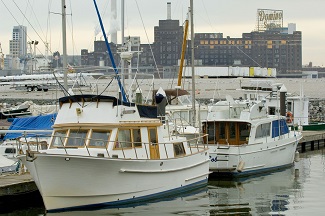
These discharges have the potential to impair water quality, adversely affect aquatic environments and increase risks to human health. While sewage discharges have potentially wide-ranging impacts on all aquatic environments, the impacts may be especially problematic in marinas, slow-moving rivers, lakes and other bodies of water with low-flushing rates.
Section 312 of the Clean Water ActExit EPA’s website (10 pp, 170 K, About PDF) sets out the principal framework for domestically regulating sewage discharges from vessels and is implemented jointly by the U.S. Environmental Protection Agency (EPA) and the U.S. Coast Guard. “Sewage” is defined under the Clean Water Act as “human body wastes and the waste from toilets and other receptacles intended to receive or retain body wastes,” and includes graywater discharges from commercial vessels (as defined at 33 U.S.C. 1322(a)(10)Exit EPA’s website(10 pp, 170 K, About PDF)) operating on the Great Lakes. Under section 312 of the Clean Water Act, vessel sewage is generally controlled in two ways. The EPA regulates the equipment that treats or holds the sewage (marine sanitation devices) and establishes areas in which the discharge of sewage from vessels is not allowed (no-discharge zones).
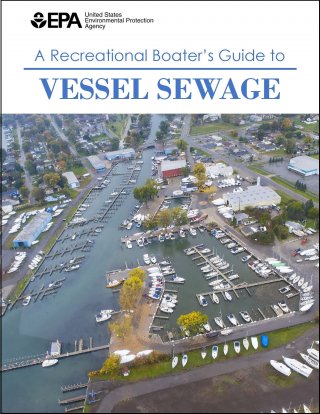 More detailed information on vessel sewage regulations can be found at the links below. Recreational boaters should also check out “A Recreational Boater’s Guide to Vessel Sewage,” a short guide that explains the basics of federal vessel sewage regulations and how to comply, as well as provides recommended best management practices to help keep our waters clean.
* Marine Sanitation Devices (MSDs)
* No-Discharge Zones (NDZs)
* Guidance for Vessel Sewage No-Discharge Zone Applications
* No-Discharge Zones by State
* No-Discharge Zones Map
* Laws and Regulations
* Frequently Asked Questions
More detailed information on vessel sewage regulations can be found at the links below. Recreational boaters should also check out “A Recreational Boater’s Guide to Vessel Sewage,” a short guide that explains the basics of federal vessel sewage regulations and how to comply, as well as provides recommended best management practices to help keep our waters clean.
* Marine Sanitation Devices (MSDs)
* No-Discharge Zones (NDZs)
* Guidance for Vessel Sewage No-Discharge Zone Applications
* No-Discharge Zones by State
* No-Discharge Zones Map
* Laws and Regulations
* Frequently Asked Questions
Vessels, Marinas and Ports
Open Sidenav Menu Close Sidenav Menu Contact Us About Vessels, Marinas and Ports Contact Us About Vessels, Marinas and Ports to ask a question, provide feedback, or report a problem. Last updated on April 28, 2026 Welcome! Please share your feedback on how we can make www.epa.gov work better for you. A red asterisk (*) indicates a required field.
Success
Thank you. Your feedback has been received.
Error
alert message Required Questions - page 1 of 2 question_55203_answer_01 How would you rate your experience on www.epa.gov today? *
0 Stars 1 Star 2 Stars 3 Stars 4 Stars 5 Stars Please explain the reason for your rating. * 400 characters allowed Would you like to take two more minutes to answer more questions to help us improve our services? Yes, keep going → No, only submit these responses Optional questions - page 2 of 2 How would you describe yourself? Business Government employee Scientist Student Other Enter other text Please tell us why you visited www.epa.gov today. 400 characters allowed Did you visit www.epa.gov to accomplish a specific task? If yes, please explain why you were able or unable to accomplish your task. 400 characters allowed How can we make www.epa.gov a more helpful website? 400 characters allowed Submit []: required