 Official websites use .gov
A .gov website belongs to an official government organization in the United States.
 Secure .gov websites use HTTPS
A lock (Lock A locked padlock) or https:// means you’ve safely connected to the .gov website. Share sensitive information only on official, secure websites.
Basic Information about Water Reuse
Water Reuse or Recycling
Water reuse, also called water recycling or water reclamation, is the treating and repurposing of "waste" water, such as municipal wastewater or stormwater, for alternative uses like landscape irrigation or even drinking water.
Recycled water is a reliable supply of water. Over 500 facilities in the United States recycle water to meet community needs.
Communities use recycled water to:
- Protect Against Droughts: 48 U.S. states experienced drought in 2024. Water reuse can significantly help reduce the impacts of drought by providing a reliable water supply.
- Supply Industries: Water is a critical part of many industries--from the data centers that power Artificial Intelligence, to automotive manufacturing, or even your favorite clothing manufacturer.
- Protect Rivers and Streams : Wastewater treatment plants and agriculture can be a source of excess nitrogen in rivers and streams. Treating and reusing water for a new purpose can help reduce these sources of nitrogen pollution.
- Enhance Groundwater Supplies : Recycled water can be injected into an underground aquifer to protect freshwater supplies from saltwater intrusion, caused by sea level rise and from land subsidence, caused by excessive groundwater pumping.
Hampton Roads, VA
 HRSD reuses treated wastewater to replenish groundwater, reduce land subsidence, and protect the Chesapeake Bay from contaminants.
San Antonio, TX
 Recycles wastewater for golf course irrigation, zoo operations, and industrial manufacturing, including car manufacturing.
Orange County, CA
 Produces up to 100 million gallons per day of recycled water to supply drinking water to local communities.
Sources of Recycled Water
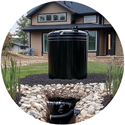
Stormwater
Washington, DC, captures and reuses stormwater to reduce pollution in the Anacostia River.

Municipal Wastewater
Fairfax County, VA, recycles its community wastewater for commercial car washing, construction, and other non-drinking water applications.

Showers, Sinks, and Laundry Water
The Corkscrew Swamp Sanctuary treats the wastewater generated at their facility and recycles it for toilet flushing.

Industrial Wastewater
Mining and oil and gas operations can recycle the water they generate during production for additional industrial activities.
Water Recycling Supports Industry While Conserving Local Supplies
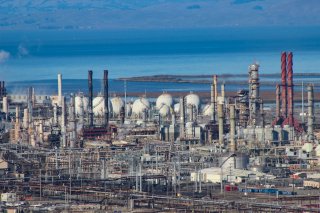 One California utility, East Bay Municipal Utility District (EBMUD), runs one of California's largest industrial water reuse projects. The one project provides roughly 7.5 million gallons of recycled water every day to Chevron's Richmond refinery. This initiative helps conserve enough drinking water for over 83,000 residents by using recycled water for industrial purposes. Wastewater gets treated to a high standard, and then supplies water for Chevron's cooling towers and the refinery's boilers. By using recycled water, the refinery's operations remain unaffected by drought restrictions, and demonstrate that recycled water is a practical solution for a reliable, drought resistant, water supply.
The Promise of Water Reuse at Data Centers
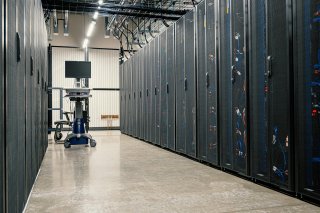 Data centers serve as the backbone to much of our digital lives, and are integral to the United States becoming the Artificial Intelligence Capital of the World. When properly treated, certain wastewater sources can serve as vital cooling water for these facilities. A recycled water-based cooling system can not only use less electricity compared to an air-cooled data center, but also reduce the strain on local communities' water supplies.
Basics of Water Reuse Treatment

Destroy or Remove Bacteria, Viruses and Protozoa
Water treatment is designed to remove the germs that can make you sick. Filters physically remove germs based on their size. Disinfection with chlorine, ultraviolet radiation, or ozone can destroy them.
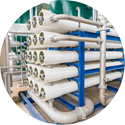
Remove Chemicals
Chemicals are removed using advanced membrane and filter technologies. These processes reduce or remove regulated and unregulated chemicals.
Redundancy
There are multiple treatment processes that remove the same types of germs and chemicals. These processes create redundancy to ensure proper removal.

Prepare for Distribution
Recycled water that is used for drinking may need salts and minerals added after treatment to improve the taste. The pH may be adjusted to prevent corrosion of the water pipes.
Protecting your health
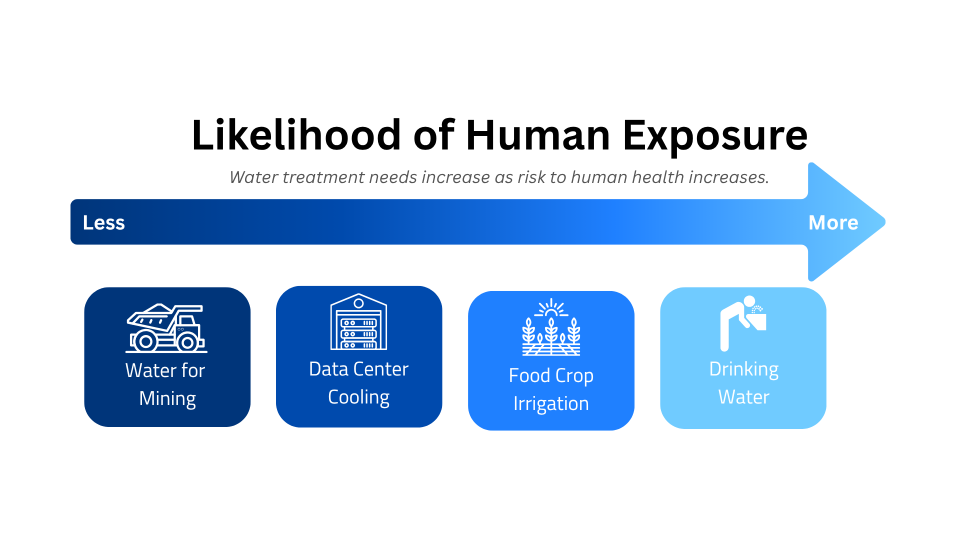
All water can be treated to make it safe for its intended use, but the amount of treatment needed depends on the risk to human health or the environment. The graphic, likelihood of human exposure, presents some of the uses for recycled water and how the treatment varies, based on the exposure to humans.
Water Reuse Regulations in the United States
There are more than 70 drinking water reuse projects serving over 8 million people per day. EPA does not require or restrict any type of reuse. Generally, states maintain primary regulatory authority (i.e., primacy) in allocating and developing water resources. Some states have established programs to specifically address reuse, and some have incorporated water reuse into existing regulatory frameworks. EPA, states, tribes, and local governments implement programs under the Safe Drinking Water Act and the Clean Water Act to protect the quality of drinking water source waters, community drinking water, and waterbodies like rivers and lakes. Together, the Safe Drinking Water Act and the Clean Water Act provide a foundation from which states can enable, regulate, and oversee water reuse as they deem appropriate. Different recycled water sources and end uses may require different treatment and monitoring requirements to protect public health. Given treatment requirements vary case-by-case and system-to-system, states with water reuse regulations, guidelines or policies will often create separate treatment specifications based on the source of reclaimed water and the end use. For example, reuse of rainwater for irrigation purposes may require less stringent treatment standards compared to those imposed for reuse of municipal wastewater for potable end uses (i.e., drinking water). To search for state-specific water reuse regulations, guidelines, and policies for various reclaimed water sources and end uses, check out the U.S. EPA’s REUSExplorer tool.
EPA's Clearinghouse of State Water Reuse Guidelines
 EPA's Regulations and End-Use Specifications Explorer (REUSExplorer) is an online tool that allows users to search summaries of state water reuse regulations and guidelines.
States, utilities, and other water professionals can make use of this database to identify and compare the treatment standards and water classifications that states have codified. This one-stop shop helps clarify the regulatory landscape and ensure that interested parties have actionable information on water reuse treatment standards.
Search the REUSExplorer
EPA's Regulations and End-Use Specifications Explorer (REUSExplorer) is an online tool that allows users to search summaries of state water reuse regulations and guidelines.
States, utilities, and other water professionals can make use of this database to identify and compare the treatment standards and water classifications that states have codified. This one-stop shop helps clarify the regulatory landscape and ensure that interested parties have actionable information on water reuse treatment standards.
Search the REUSExplorer
Water Reuse
Open Sidenav Menu Close Sidenav Menu Contact Us about Water Reuse and Recycling Contact Us about Water Reuse and Recycling to ask a question, provide feedback, or report a problem. Last updated on October 21, 2025 Welcome! Please share your feedback on how we can make www.epa.gov work better for you. A red asterisk (*) indicates a required field.
Success
Thank you. Your feedback has been received.
Error
alert message Required Questions - page 1 of 2 question_55203_answer_01 How would you rate your experience on www.epa.gov today? *
0 Stars 1 Star 2 Stars 3 Stars 4 Stars 5 Stars Please explain the reason for your rating. * 400 characters allowed Would you like to take two more minutes to answer more questions to help us improve our services? Yes, keep going → No, only submit these responses Optional questions - page 2 of 2 How would you describe yourself? Business Government employee Scientist Student Other Enter other text Please tell us why you visited www.epa.gov today. 400 characters allowed Did you visit www.epa.gov to accomplish a specific task? If yes, please explain why you were able or unable to accomplish your task. 400 characters allowed How can we make www.epa.gov a more helpful website? 400 characters allowed Submit []: required